
Thermal Stress Analysis
Predict early-age temperatures, thermal stresses and cracking risk in mass concrete members with a 3D finite element model that runs in your browser.
Thermal & Stress 3D
Build the member, set the mix and the site conditions, and follow the temperature and stress fields through the first days after placement, in 3D, frame by frame.
From mix design to cracking risk
Bridge substructure geometry
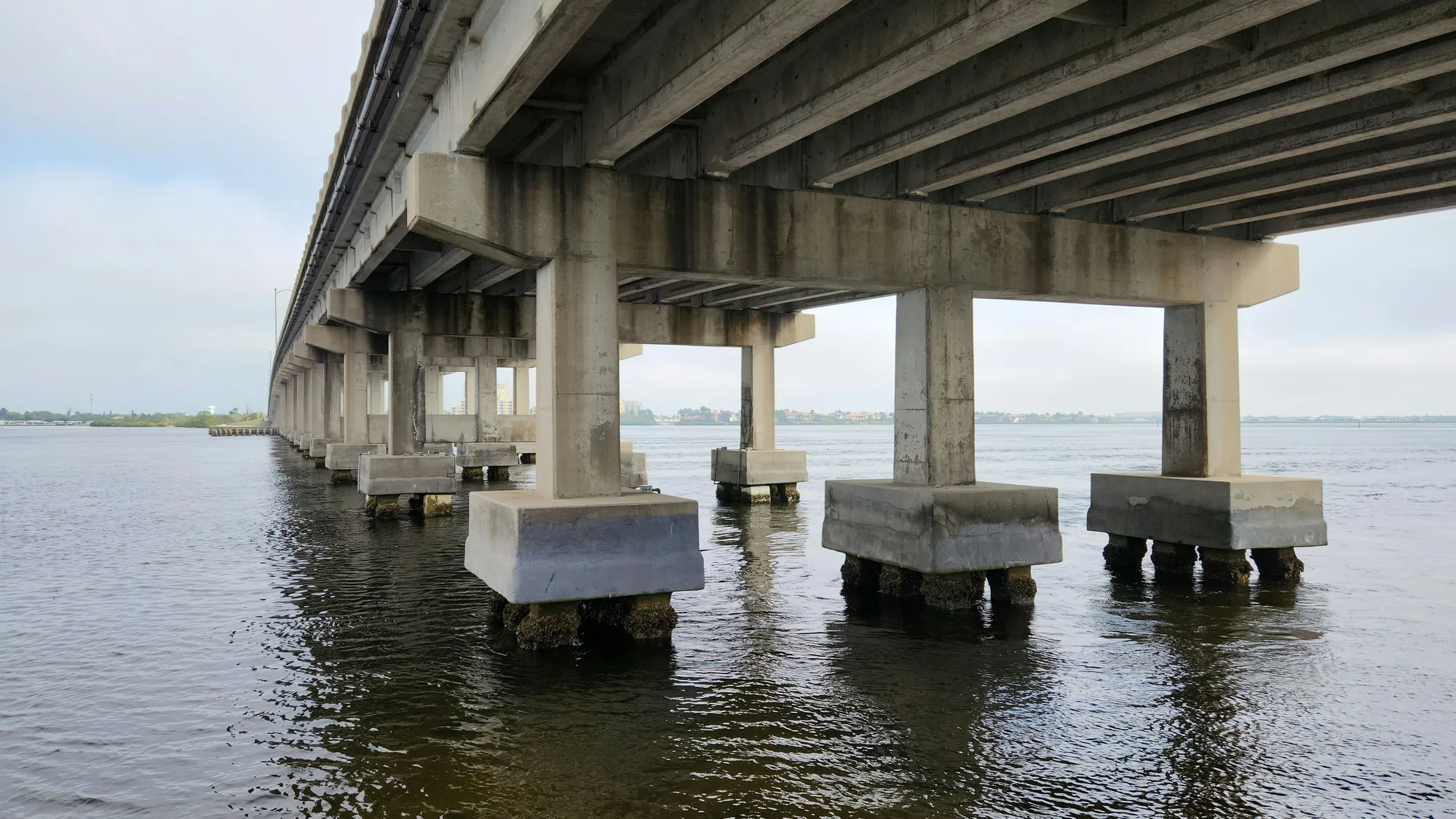
Footings, circular and rectangular pier columns, hammerhead pier caps, and abutments with wingwalls, on footings with piles, subbase and soil.
3D transient thermal model
Heat of hydration from the mix, temperature-dependent kinetics, conduction, convection and solar gain through the first days after placement.
Early-age stress with creep
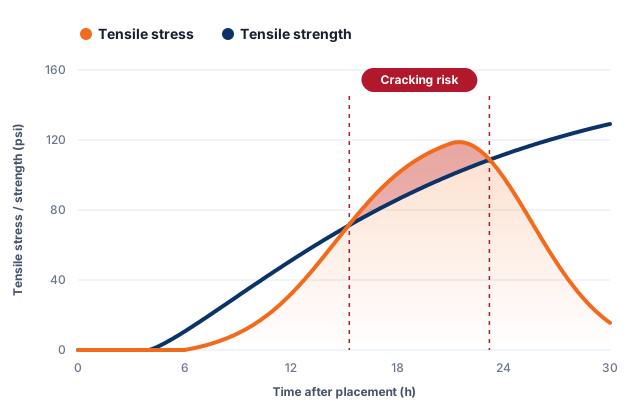
Strength and stiffness that develop with hydration, viscoelastic creep, restraint from the footing, and the risk of cracking at every point.
Formwork and insulation
Model the forms and blankets through their thickness, with a stripping time, to plan protection that keeps temperature differences in check.
Site weather
Import hourly air temperatures for the pour location and date, or enter a daily cycle or your own schedule.
Results you can use
Contour plots with section cuts, probe histories, and a full results table exported to a spreadsheet.
Built on published research
The material models and the analysis method come from research on the early-age thermal behavior of mass concrete containing supplementary cementitious materials, calibrated against field and laboratory measurements.
See the publications- Prediction of the early age thermal behavior of mass concrete containing SCMs using ANSYS, part 2: evaluation of thermally induced stresses
- Prediction of the early age thermal behavior of mass concrete containing SCMs using ANSYS
- Modeling the thermal and mechanical properties of early age concrete containing ground granulated blast furnace slag